Dear readers,
A woman came to see me carrying a folder of lab results, and every value in it had been marked normal. She had been told as much at three separate visits over four years, which is why she had eventually stopped mentioning the fatigue, the weight that had crept on without any change in how she ate, the sleep that had gone shallow, and the quiet sense that her body had stopped being hers somewhere around forty-three. Nothing was wrong on paper. Something was obviously wrong with her.
Here is what that folder actually told me. It told me she landed inside the range where most people land, which is a statement about a population and not a statement about her. A reference range is built from the bell curve of everyone who happened to get tested, most of whom were not particularly healthy and none of whom were her. Being average in a country where the majority of adults are metabolically unwell is not the same thing as being well, and I think an enormous number of people get quietly failed by that distinction every single year.
Precision medicine is the effort to stop treating you as the average of everybody else. That is the whole idea, stripped of the marketing that has grown up around it.
What it actually means
The medicine most of us were trained in was built on population averages, and that was a genuine achievement. It gave us blood pressure targets, cholesterol guidelines, and screening schedules that have saved an extraordinary number of lives, and I have no interest in pretending otherwise. The limitation is that a treatment which works beautifully across ten thousand people can still be the wrong treatment for the one person sitting in front of me, and the traditional way of discovering that has been to start the medication and see what happens over the following year.
Precision medicine narrows that gap. It means measuring more than the standard panel, interpreting what comes back in the context of your symptoms and your goals rather than against a curve of strangers, choosing the intervention that matches your particular physiology, and then watching closely enough to know within weeks whether it is working. It is less exotic than it sounds. Most of it is simply the practice of paying attention, supported by better tools than we had a decade ago.
It also requires time, which is the part nobody advertises. You cannot do this in a seven-minute visit. The reason I built my practice the way I did is that precision is not really a technology problem. It is a scheduling problem.
What this looks like in my practice
Medical weight loss. Two women can arrive at the same weight, the same age, and the same BMI, and have almost nothing else in common. One is hungry all day and never feels full. One eats reasonably and cannot lose a pound because her insulin resistance has been building for fifteen years. One eats when she is anxious, which is a real physiologic pattern and not a character flaw. These are different problems, and they respond to different medications at different doses on different timelines.
So I start by measuring what is actually driving the weight, and then I read your response early rather than waiting a year to find out. If you are eight to twelve weeks in and the trajectory is not what your physiology predicted, that is information, and we change the plan. I also care about what you are losing, not only how much. Roughly a third of the weight lost on a GLP-1 alone can be lean tissue, and lean tissue is the thing that keeps you strong at seventy-five. Protecting it with adequate protein, resistance training, and a rate of loss appropriate to your age is not a nice-to-have. It is the difference between getting thinner and getting healthier.
Hormone optimization. The woman with the folder of normal labs was in perimenopause, and she is the reason I take this work as seriously as I do. For twenty years, hormone therapy carried a boxed warning that was based on an early reading of the Women’s Health Initiative, and an entire generation of women were told, gently and incorrectly, that the treatment for their symptoms was more dangerous than the symptoms. The FDA has now walked that back. The agency announced the removal of those warnings in November 2025 and approved the first batch of relabeled products in February 2026, with the updated labels reflecting what the longer follow-up data actually show: that risk looks very different for a woman who starts therapy before sixty or within ten years of menopause than it does for a woman who starts at seventy.
I want to be careful here, because a corrected label is not a prescription for everyone. Hormone therapy is still a decision that depends on your history, your risk profile, your symptoms, and what you want your next thirty years to look like. What has changed is that we are allowed to have the conversation honestly. Precision in this area means choosing the route and formulation that fit your risk rather than defaulting to whatever is easiest, treating the woman rather than the number on the estradiol assay, and being just as rigorous about testosterone and thyroid when they belong in the conversation.
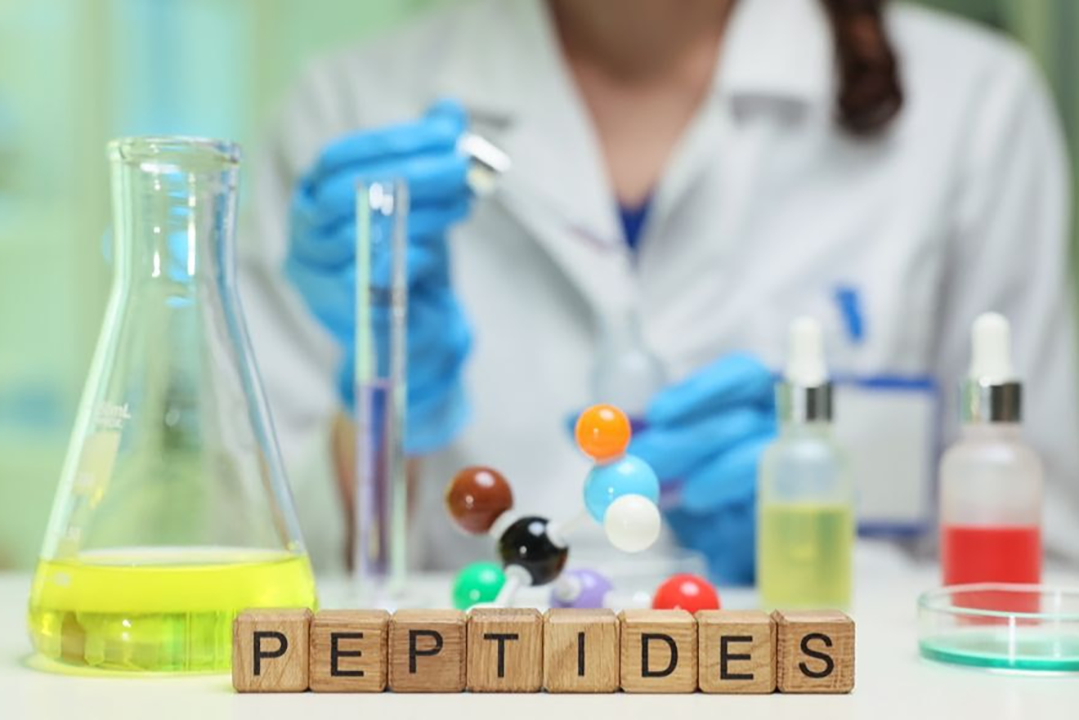
Peptide therapy. I want to be unusually direct about this one, because it is where I depart most visibly from how conventional medicine operates. Many of the peptides I use have not been through large human trials, and I am not going to imply otherwise. What they have is a well-characterized mechanism, a substantial body of preclinical work, a safety profile I have watched closely across my own patients, and in many cases decades of use in clinical settings without the signal of harm that would make me stop. I have decided that I am willing to practice at that edge when the potential benefit is real and the risk is low, and I think you deserve to know that is the choice being made on your behalf.
What makes that responsible rather than reckless is everything that surrounds it. Before I recommend a peptide, I tell you honestly what the evidence behind it looks like, including when it is animal data and mechanistic reasoning rather than a phase 3 trial. We agree on what we are trying to change and how we will know, we set a timeline rather than letting a protocol run indefinitely, and I monitor accordingly. If it is not doing what we hoped by the point we agreed on, we stop. The absence of a large trial is not the same thing as the absence of evidence, but it is also not a license to use anything, and the distinction between those two sentences is most of my job. I do not hand out whatever protocol is circulating on a forum this month, and I would rather be the physician who tells you where the certainty ends than the one who sells past it.
Gut health testing and gut healing protocols. A great many people have spent years being told their gut symptoms are stress, and some of them are right to be frustrated about it. Proper testing can identify bacterial overgrowth, digestive insufficiency, inflammation, and specific pathogens, and those findings lead somewhere specific rather than to a vague instruction to eat more fiber. I want to draw a hard line, though, between diagnostic testing and the consumer microbiome kits that tell you which foods your bacteria prefer. The science is not there yet for most of those claims, and paying for a colorful report is not the same as getting an answer.
The testing is only useful because of what follows it. The protocol I build for you comes out of what your results actually showed, which is why two people with identical bloating can leave my office with entirely different plans. We address what is overgrown or shouldn’t be there, support digestion where your body is not doing the work on its own, repair the lining, and pay attention to motility, because a gut that does not move will simply recreate the same problem in six months. Then we retest, rather than assuming it worked because you feel better on a Tuesday. This matters especially for my weight loss patients, because when someone has significant GI symptoms on a GLP-1, the medication is not always the culprit. Sometimes it has only revealed a problem that was already there.
What is coming, and what I am watching
The most interesting work in longevity right now is not a supplement. It is the effort to treat aging biology as something you can actually intervene in, and a few threads are far enough along that they will reach patients like mine within a handful of years.
Muscle preservation is the one I expect to arrive first, because it solves a problem I manage every week. In the BELIEVE trial, combining an activin-pathway antibody with semaglutide produced about 22% total body weight loss, with roughly 93% of that loss coming from fat compared with about 72% for semaglutide alone. A separate Regeneron program using a myostatin antibody has shown it can spare a substantial share of the lean mass that would otherwise be lost. If these hold up in phase 3, the conversation shifts from how much weight you lost to how much of your body you kept, which is the conversation we should have been having all along.
The microbiome field is finally growing up. The step forward is the move away from donor stool toward defined bacterial consortia that can be manufactured consistently, and a Mount Sinai team published exactly that this June, using a fifteen-strain product for recurrent C. difficile with an oral version already in development. That is the template. Once we can prescribe a specific, reproducible set of organisms the way we prescribe a drug, gut testing stops being mostly diagnostic and becomes the front end of an actual treatment.
Mesenchymal stem cells are the area where I get the most questions and where the gap between the science and the clinic is widest. The first thing worth understanding is that these cells do not work the way the word “stem cell” makes people imagine. They are not rebuilding your knee by turning into cartilage. They function as signaling cells, releasing factors that modulate inflammation and instruct the tissue around them, which is a more modest description and also a more accurate one. The field crossed a real threshold in December 2024, when the FDA approved the first mesenchymal stromal cell therapy in the United States for steroid-refractory graft-versus-host disease in children, and this April that same product was cleared to move directly into a registrational trial in Duchenne muscular dystrophy. Trials in heart failure and neurologic disease are moving as well. What made that approval take so long was not doubt about whether the cells do something. It was the difficulty of proving that one batch is the same as the next, which tells you exactly how seriously the manufacturing problem should be taken.
Exosomes are the logical next step in that story, because they may be the actual mechanism. If mesenchymal cells work primarily by secreting signals rather than by becoming tissue, then the vesicles carrying those signals are the interesting part, and you can imagine a future in which we deliver the message without having to deliver the cell. I find that genuinely compelling, and I am exploring it. I am also not going to describe it to you as settled, because it is not. No exosome product has been approved by the FDA for any therapeutic use, the quality of what is being sold varies enormously from one supplier to the next, and the adverse events that have been reported have come overwhelmingly from products nobody had properly characterized.
So my interest here comes with conditions attached. I want to know where a product came from, what is actually in it, and how the company making it demonstrates that this batch resembles the last one, which is the same question that held up the first cell therapy approval for years and is not a bureaucratic detail. I want a specific reason to reach for it in your case rather than a general enthusiasm for regeneration. And I want you to hear the word “exploring” and understand that I mean it, because the honest position in August of 2026 is that the biology is promising, the commercial market has run well ahead of the evidence, and telling those two things apart is exactly what you are paying a physician to do. When I know more, I will tell you what I have learned, including if what I learn is that it did not do what we hoped.
My standard for bringing something into this practice is not that it has cleared every possible trial, because if that were the bar, I would be practicing the medicine of 2010. The standard is that I understand the mechanism well enough to predict what it should do, that I can tell you truthfully how strong the evidence is and where it thins out, that we have a way to measure whether it is actually working in you rather than in a study population, that the risk is low enough to justify a careful trial, and that I am willing to stop when the answer is no. Some of what I described above will meet that bar in the next few years and some of it will not survive contact with it, and I will say so either way. That is not caution for its own sake. That is what it means to be the person responsible for the outcome.
The point of all of this
Precision medicine is not a machine that tells you your future. It is a way of practicing that starts from the assumption that you are not a statistic, that your symptoms are data even when your labs are unremarkable, and that the right answer for you may not be the average answer for everyone.
The woman with the folder is doing well now. What changed was not a miracle test. What changed was that someone finally asked her what was happening, believed her, measured the right things, and adjusted until it worked. That folder of normal labs was never the whole story. It was only the story we knew how to tell.
If you have been told everything looks fine and you know it does not, I would like to hear the rest of it.
Reach out to our office at 703-866-4144 or schedule a free introductory call with us and let’s get you sorted the right way.
Best wishes,
Dr. Gajer
The Gajer Practice – The Science of Health, The Art of Transformation.